
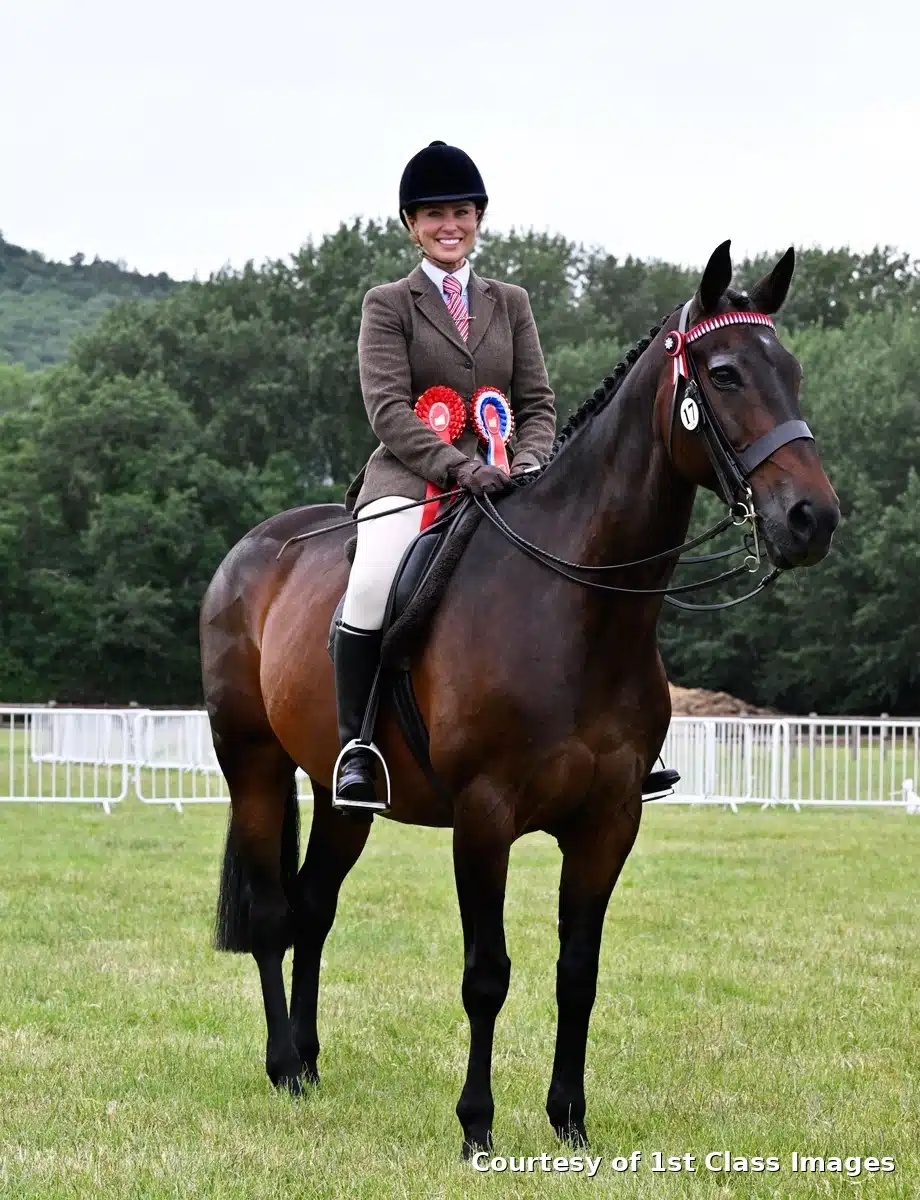
What Makes a Winning Veteran Horse? Judge Nigel Vale Shares His Thoughts

Proud to Sponsor HOYS Ridden Veteran Championship
Harry Hall One Club is proud to sponsor the Veteran Horse Society HOYS Ridden Veteran Championship, supporting competitors from those first qualifying classes all the way to the iconic HOYS arena. It’s a partnership that celebrates everything veteran showing represents, recognising the care, dedication and partnership that allows horses aged 15 and over to continue enjoying active, successful lives.
But what is it that makes one veteran horse stand out from another?
When so many beautifully turned-out horses enter the ring together, what catches a judge’s eye?
Few people are better placed to answer those questions than Nigel Vale.
Nigel enjoyed a successful showing career with his family’s Shetland stud before moving into judging, where he has spent the past 26 years officiating across an impressive range of societies.
He represents judging panels including the Shetland Pony Stud-Book Society (SPSBS), UK Ponies & Horses (UKPH), CHAPS, TGCA, BApS, the Veteran Horse Society, CDEGB, BMHS, MHCGB, FBS and IMHPS, among many others. As a Veteran Horse Society committee member and Judges’ Coordinator, he has had the privilege of judging at many of the UK’s Royal shows, alongside riding club, agricultural and county shows throughout the UK, Europe and more recently invited to judge in Australia next year.

Enthusiasm never goes out of fashion
When asked what makes a winning veteran horse, Nigel’s answer isn’t about extravagant movement or eye-catching turnout.
For him, it starts with attitude.
“A winning Veteran will show enthusiasm, have presence and the ability to show itself well, moving freely and confidently with no obvious stiffness and be of the appropriate weight.”
It’s easy to assume that age means slowing down, but the best veteran horses rarely give that impression. They might be older, but they still enter the ring with purpose.
They look interested in what’s happening around them and seem genuinely comfortable in their work. That enthusiasm is often what separates a good performance from a memorable one.
Judges understand that a 20-year-old horse isn’t expected to move like a five-year-old. They’re looking for a horse that is fit for its age, enjoying its job and moving as comfortably and freely as possible.
Condition also plays an important role. Carrying the right amount of weight, maintaining muscle tone and looking healthy all suggest thoughtful management behind the scenes.
Every veteran has a story
One of the pleasures of judging veteran classes is the incredible variety. Unlike some showing classes where horses can appear quite similar, veteran classes bring together different breeds, types and backgrounds. Some may have spent years competing at affiliated level, others have been treasured family horses, hunting companions or reliable riding club all-rounders.
“The quality and types, the condition, manners, and movement of these older horses is rewarding to judge.”
There isn’t one perfect veteran horse. Heavy horses, natives, cobs, hunters, riding horses and coloureds can all excel within their own sections.
Instead, judges are looking at how well each horse represents its type while considering its condition, way of going and overall presentation.
Experience often shows itself in subtle ways too. Veteran horses have usually seen it all before. Loudspeakers, flapping banners, excited spectators and busy collecting rings rarely faze them. That quiet confidence often creates a lovely picture in the ring.

Presence matters from the very first step
Every judge develops an eye for detail, but first impressions still count.
Nigel believes the moment a horse enters the ring can immediately catch the judge’s attention.
“From the moment they enter the ring, they need that presence with the ‘look at me factor’.
It catches the judge’s eye because it looks proud, comfortable and like it knows its job”.
That presence can’t really be manufactured.
It comes from a horse that feels well, is comfortable in its body and has been prepared carefully at home. A horse that walks confidently, carries itself naturally and seems relaxed often stands out without needing to do anything dramatic.
Behaviour throughout the class is just as important.
“It must stand quietly and show with confidence without being difficult.”
Good manners never stop being valuable, whatever a horse’s age. Standing patiently while others are judged, remaining settled during line-ups and responding politely to the handler or rider all contribute to the overall picture.
A horse that constantly fidgets, becomes distracted or proves difficult to manage inevitably makes judging more difficult, even if its conformation and movement are excellent.
Success starts long before show day
The work that produces a successful veteran class performance usually begins weeks before a competition.
Regular exercise, appropriate feeding, good farriery, dentistry and routine healthcare all help older horses feel their best. By the time they arrive at the showground, the goal should simply be to present the results of consistent preparation.
Nigel’s advice to competitors is refreshingly straightforward.
“My advice, apart from making sure you know your Rule Book, would be Manners and Presentation.”
Knowing the rules sounds obvious, but every society has slightly different requirements. Understanding eligibility, turnout rules and class procedures helps competitors avoid unnecessary mistakes and allows them to focus on presenting their horse with confidence.
Preparation also means making sure you’ve covered the practical requirements before leaving for the showground. All competitors in Veteran Horse Society affiliated classes must have valid public liability insurance with a minimum of £2 million cover for the veteran horse they are competing. Personal accident insurance is also strongly recommended. It’s worth checking your insurance well before the season begins so there are no last-minute surprises “
As a proud sponsor of the Veteran Horse Society HOYS Ridden Veteran Championship, Harry Hall One Club is committed to supporting competitors both in and out of the ring. If you’re reviewing your insurance you can get a quote through Harry Hall One Club here. Harry Hall One Club offers public liability and personal accident insurance, legal support and extra perks like discounted Horse of the Year Show tickets from £5.75 per month.
Alongside knowing the rules, Nigel believes good manners make all the difference.
“Your horse must stand quietly, lead politely, trot when asked and be settled in a busy atmosphere.”
These are skills that come from regular practice rather than being left until the first show of the season. Visiting different venues, exposing horses to busy environments and rehearsing simple in-hand routines all help build confidence.
Presentation completes the picture.
“Good preparation matters, a clean polished coat, tidy mane and tail (plaited or unplaited), correct turnout and the handler or rider neatly presented.”
Attention to detail shows pride in your horse and respect for the class. It doesn’t necessarily mean spending hours creating an elaborate finish, but ensuring everything is clean, appropriate and well maintained.
Celebrating horses that have earned their place
Perhaps that’s what makes veteran classes so enjoyable.
Every horse standing in the ring has reached an age worth celebrating. They’ve remained healthy enough to compete, they’ve been cared for throughout their lives and they have owners who continue investing time in keeping them happy, comfortable and active.
For judges like Nigel Vale, selecting winners is about far more than placing horses in order.
It’s about recognising horses that still enjoy their work, carry themselves with confidence and demonstrate the qualities that good horsemanship develops over many years.
Whether you’re aiming for your first Veteran Horse Society qualifier, hoping to earn your place at the National Championships or dreaming of competing under the lights at HOYS, the same principles apply.
A horse that is comfortable, well prepared, mannerly and presented with care will always make a positive impression.
Sometimes, that quiet confidence that only comes with age is exactly what makes a veteran horse impossible to overlook.
If you’re competing in Veteran Horse Society affiliated classes this season, remember to check the latest rule book, make sure your insurance is in place and, above all, enjoy celebrating everything that makes our veteran horses so special.
