
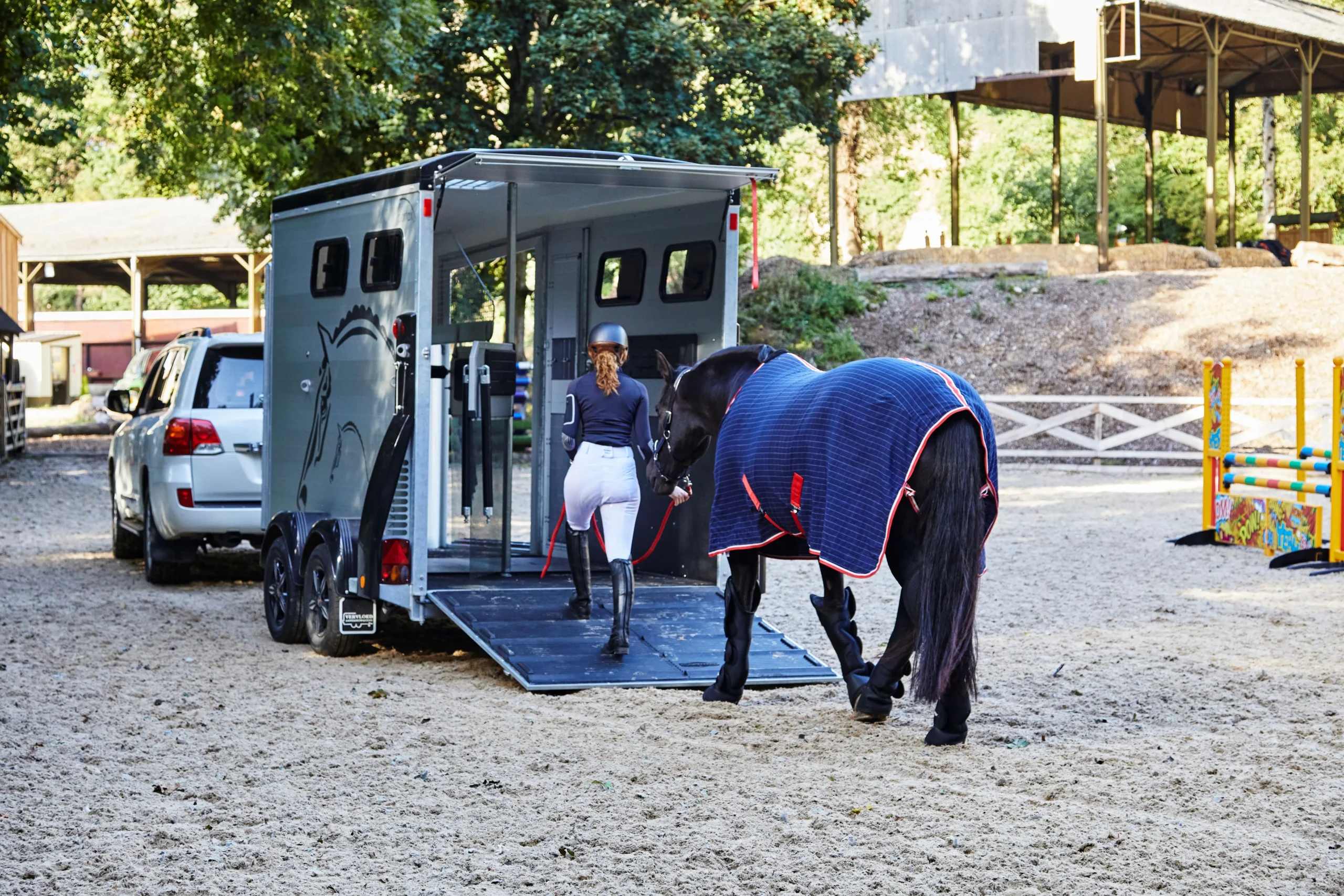
Broken Down With a Horse On Board? Expert Advice From Redwings & Harry Hall

Nobody plans for a breakdown. But whether you’re towing a horse trailer to a competition, driving your horsebox to a new yard, or on a routine journey, knowing exactly what to do in those first few minutes makes all the difference — for you, your vehicle, and your horse.
To help Harry Hall One Club members feel properly prepared, we teamed up with the equine welfare experts at Redwings Horse Sanctuary to put together this guide. The advice below comes from Lucy Wood, Senior Team Leader of Redwings’ Rehoming Team, who works hands-on every day helping horses build confidence around loading, travelling, and coping calmly with the unexpected.
If you are a Harry Hall One Club member with equine breakdown and recovery cover, this guide covers what to do, and how to keep your horse settled, while help is on the way.
1. Don’t Panic
“It’s the first thing we’d always say,” says Lucy. “If you were to have an emergency on the road, or need to unload, the number one rule is: don’t panic.” A calm driver makes better decisions, and if you’re travelling with a horse, they will pick up on your energy immediately. Take a breath, assess the situation, and work through the steps below.
2. Get Everyone Safe First
Before you worry about the vehicle:
- Get off the carriageway if you possibly can, pull onto the hard shoulder, a lay-by, or as far onto the verge as it’s safe to do. Put your hazard lights on, and use a warning triangle placed well behind the vehicle if you have one.
- Get people away from the road, behind a barrier or well up the verge, particularly on faster roads.
- If you’re on a motorway and can’t reach a safe stopping point, stay in the vehicle with your seatbelt on and call for help — don’t attempt to walk to a hard shoulder on a live carriageway and ring 999 as soon as possible.
3. Be Prepared Before You Even Set Off
According to Lucy, the members and owners who cope best with a breakdown are the ones who prepared long before they got in the vehicle: “Make sure you’re already prepared, we always have lots of snacks, food in case you’re there a little while, water, and forage. We also always have cameras, so you can see the horses as well, and make sure you have a first aid kit, so if they’re wearing any injuries or things like that, you’ll be prepared.”
Keep the following in your towing vehicle or horsebox as standard:
- Snacks and water, for you and for your horse, in case of a long wait
- Forage, hay or haylage to keep a horse settled and occupied
- A first aid kit, for people and for horses, in case of minor injuries
- A camera or CCTV system, so you can check on your horse without opening the vehicle
- A charged phone (and charger) with your breakdown cover details saved and easy to find
- Your horse’s details (vet, insurer, passport) and passenger details in case you need them
4. Read Your Horse’s Body Language
This is where Redwings’ expertise really comes in. A stationary trailer or box, especially with traffic passing close by, can be unsettling for a horse who doesn’t understand what’s happening.
“The signs that a horse could be feeling anxious or overwhelmed,” explains Lucy, “come down to reading their body language. They may look tense, their eyes may look scared, the nose will tense up, and their ears might go back. They might stop before they even get to the ramp, or walk backwards.”
Watch for:
A tense body or stance
- Wide, worried eyes
- Tension through the nose and muzzle
- Ears pinned back
- Stopping, hesitating, or trying to walk backwards
Keep them settled where possible:
- Offer forage or a small feed to encourage them to relax
- Talk to them calmly and check on them regularly
- Avoid unnecessary noise or sudden movement around the trailer or box
Only unload if it’s genuinely safer to do so; for example, somewhere secure and off the road, with the horse showing real signs of distress. Unloading at the roadside should be a last resort, not a first response: a stationary vehicle is usually safer than a horse loose or in-hand next to moving traffic.
5. Build Confidence Before You Need It
Lucy’s advice for owners doesn’t stop at breakdown day, it starts long before. “It’s good to make sure your horse is used to loading in different areas as well, so if you do need to unload them and then reload them into a different lorry or trailer, they’re confident doing that.”
At Redwings, when working with a horse who’s reluctant to load, the team focuses on building confidence gradually rather than forcing the issue:
- Practise loading in a few different locations, not just your own yard
- Walk your horse over varied terrain and surfaces so a ramp feels familiar, not alarming
- Reward generously with tasty treats and forage so loading is a positive experience
- If a horse isn’t confident loading alone, consider loading them alongside a calm companion
“We would obviously do it very gradually,” says Lucy. “Build up to being confident loading in one area, then change the areas up so they’re used to loading in multiple different places. We make sure it’s set up for them to succeed.”
A horse who already loads confidently in unfamiliar places is a horse who will cope far better if you ever need to unload and reload roadside during a breakdown.
6. Call Your Breakdown Cover
Once you and your horse are safe, call your breakdown provider straight away. Your Harry Hall One Club breakdown cover is provided through either ARAG or ERS, depending on your policy, check your membership documents to see which applies to you, and save the right number to your phone before you travel.
ARAG breakdown cover
- Contact the Call Assist 24-hour control centre on 0330 303 1367.
- If you’re unable to get through, telephone 0044 1206 714379.
ERS breakdown cover
You can contact the 24-hour Rescue Control Centre on:
- 0800 243 783 or 01277 720718 when calling from the UK, or
- +44 1277 235 999 when calling from Europe
If you’re deaf, hard of hearing or speech impaired and need assistance, you can text your full name and registration number to +44 (0) 7537 404890.
Please note: breakdowns occurring within the first 24 hours of a new policy starting are not covered. This does not apply to renewing policies.
When you get through, have ready: your location (postcode, what3words, or nearest junction/landmark), your vehicle details, and whether you have a horse or horses on board, this affects how the call is prioritised. Mention if you’re on a fast or busy road, and stay with your vehicle in a safe position until help arrives, checking on your horse throughout.
7. While You Wait
- Keep hazard lights on and stay visible, especially in low light or bad weather
- Check on your horse periodically without over-fussing; calm, quiet reassurance goes a long way
- Keep your first aid kit accessible for any minor knocks or scrapes
- If someone stops to help, exercise normal caution while still following your breakdown provider’s instructions

Frequently Asked Questions
What should I keep in my trailer or horsebox in case of a breakdown?
Snacks and water for you and your horse, forage such as hay or haylage, a first aid kit for people and horses, a charged phone with your breakdown cover details saved, and ideally a camera or CCTV system so you can check on your horse without opening the vehicle.
Should I unload my horse if I break down?
Only if it’s genuinely safer, for example, if you’re off the road in a secure spot and your horse is showing real signs of distress. In most cases, a stationary vehicle is safer than a horse loose or in-hand beside moving traffic.
How do I know if my horse is anxious in the trailer?
Look for a tense body, wide or worried eyes, tension through the nose and muzzle, pinned-back ears, and hesitating or stepping backwards. These are all signs your horse may be feeling overwhelmed.
How can I prepare my horse for unexpected loading situations, like a breakdown?
Practise loading in different locations, not just your home yard, and reward generously to build confidence gradually. A horse that’s used to loading somewhere unfamiliar will cope far better if you ever need to reload roadside.
Does Harry Hall One Club offer breakdown cover?
Yes — any Harry Hall One Club Member can add on breakdown and recovery cover for cars, motorbikes, campervans, motorhomes, trailers, horse trailers, and horseboxes. It’s good to know that if you take our trailer breakdown and recovery cover, your towing vehicle is also covered even when it is not towing. For example, if you break down without your horse onboard, your vehicle and trailer are recovered together.
What number do I call if I break down with Harry Hall One Club cover?
It depends on your provider. For ARAG breakdown cover, call Call Assist on 0330 303 1367, or 0044 1206 714379 if you can’t get through. For ERS breakdown cover, call 0800 243 783 or 01277 720718 from the UK, or +44 1277 235 999 from Europe. Check your policy documents to confirm which provider covers you.

The Takeaway
Breakdowns happen to even the most experienced and well-prepared owners, it’s simply part of travelling regularly with horses. As Lucy from Redwings puts it, the difference between a stressful ordeal and a manageable inconvenience comes down to three things: staying calm, being prepared, and knowing your horse’s signals.
With Harry Hall One Club, you can add equine breakdown and recovery cover so you and your vehicle are looked after if the worst happens. Pair that with a well-stocked trailer, a horse who’s practiced loading in different places, and a level head, and you’ll be back on the road with far less stress.
___________________________________________________________
This guide was produced in partnership with Redwings Horse Sanctuary, the UK’s largest horse charity, and Harry Hall Insurance Brokers.
About the expert: Lucy Wood is Senior Team Leader of the Rehoming Team at Redwings Horse Sanctuary, where she works daily with horses building confidence around handling, loading, and travelling.
About Redwings Horse Sanctuary: Redwings is the UK’s largest horse charity, dedicated to the welfare of horses, ponies, donkeys and mules through rescue, rehoming, and education.
About Harry Hall One Club: Harry Hall One Club is the membership which gives you access to insurance, legal support and extra money-saving perks for a lifetime outdoors.
